In 1923, Mao Yisheng and others established the Department of Civil Engineering at the National Southeast University. At this time, the "Civil Structural Engineering Category" and "Construction Category", which were set up in senior grades, were the predecessors of the Department of Structural Engineering. In 1952, the Discipline of Industrial and Civil Buildings established by the Department of Civil Engineering was the prototype of the Department of Structural Engineering. In 1997, the Department of Civil Engineering developed into the School of Civil Engineering, and the Department of Structural Engineering was also established on the basis of Discipline of Industrial and Civil Buildings. The Department of Structural Engineering recruit students according to the major in succession of Discipline of Industrial and Civil Buildings, Discipline of Structural Engineering, Discipline of civil engineering, and continues to present. The Discipline Civil Engineering was rated A+ in the fourth round of national discipline evaluation and was included in the list of "World-Class Discipline Construction" (2017).
There are 78 faculties in the Department of Structural Engineering. Under the collective efforts of all faculty members, the department has expanded rapidly and focusing on key areas such as smart cities, new urbanization, building industrialization, new materials technology, and urban safety, which are actively promoting the construction of new engineering disciplines in line with national strategies. Especially the area of concrete and pre-stressed concrete, structural engineering disaster, development of fiber-reinforced plastic (FRP) materials and their applications, project structural health monitoring/mitigation technology, civil engineering construction technology, structural performance assessment and reinforcement, pre-stressed structural steel, and space fields of distinctive features. It has been both domestically and internationally recognized.
Over the years, the Department of Structural Engineering has achieved remarkable products in scientific research, educational reformation and student teaching. Faculties of the department have undertaken hundreds of national, provincial and ministerial key research projects including national key research & development plans, 973 plans, national science and technology support plans, and has more than ten national excellent courses / teaching projects and nearly ten national planning teaching textbook materials. A large number of key technic problems of national, provincial and urban construction projects have been tackled. The faculties have obtained a large number of internationally leading results, including 1 National Science and Technology Progress Award (First Prize), more than 10 National Technology Invention Award / Science and Technology Progress Award (Second Prize), and strive to transform them for practical engineering application at a timely manner to promote social development.
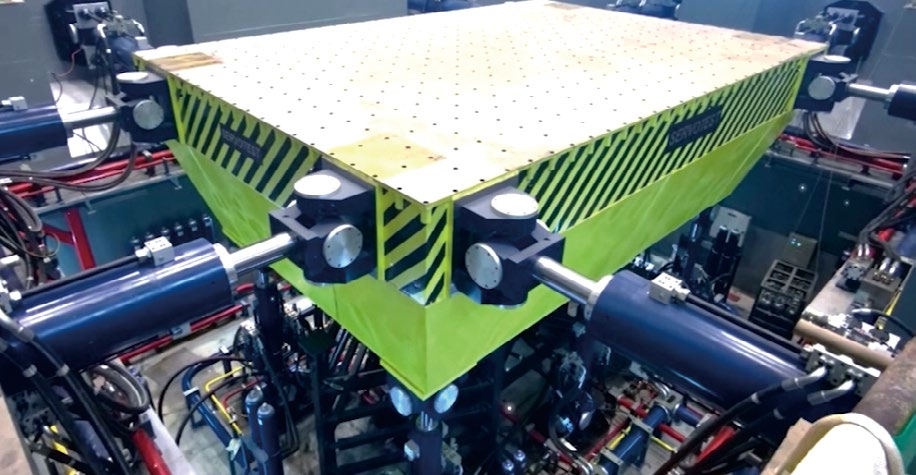
China's leading large-scale earthquake simulation shaking table
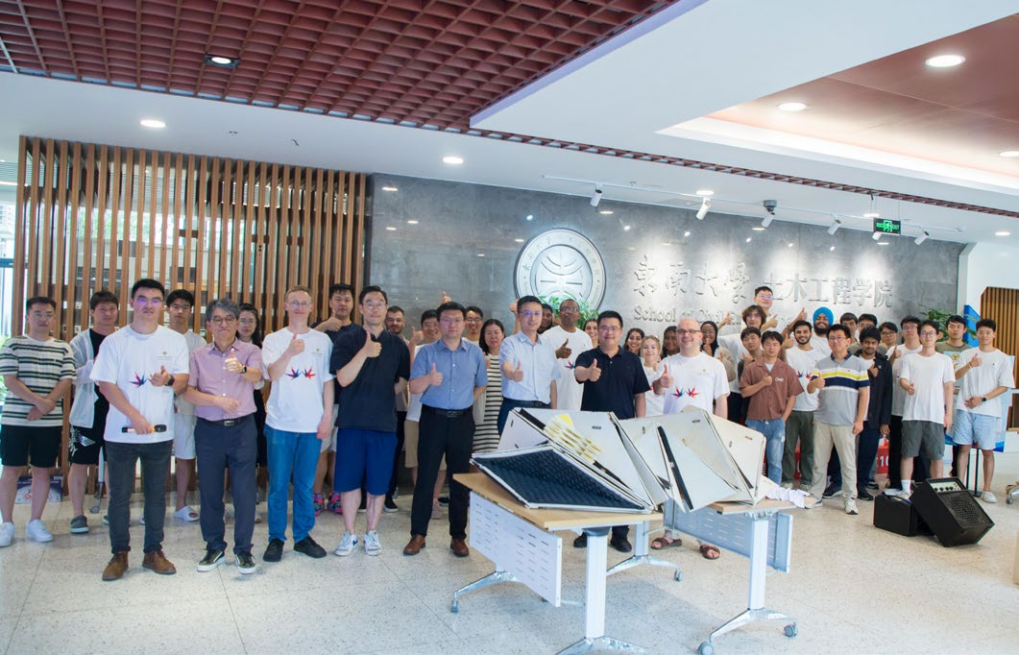
Magic Folds International Workshop

FAST-The World's Largest Filled Aperture Radio Telescope (Participated by Professor Guo Zhengxing and Professor Luo Bin's Team)

School of Civil Engineering, No.2 Southeast University Road,
Jiangning District, 211189, Nanjing, Jiangsu Province, P.R China
025-52091227
admin_civil@pub.seu.edu.cn

CopyRight © School of Civil Engineering 2012-2020
